


Letter chasing payment before legal action
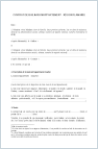
Late payment by customers is just one of the problems an accountant has to face. Fortunately, there is a way to wake up the people who owe you money, and get them to do something about it.
Last chance
Most businesses want to avoid costly and time-consuming litigation, so when you show them that you mean business they will most often pay up to avoid extra hassle. So a letter from you that looks like a formal legal notification of an impending lawsuit is a way of saying to your customer “this is your last chance”. Indeed these letters normally get passed to the owners of the business rather than the person who (misguidedly) thinks they are doing their employer a favour by not paying you.
It’s always best to keep such letters as simple as possible. You may have all sorts of issues involving your trading relationship that you would like to point out, but this is not the place for such a discussion.
There’s no official legal form which your chaser letter has to take. However, you need to include all the essential information such as: what the sale was (invoice reference and date), how much is owed, for how long, and your payment information. You then set a final deadline for payment. This can be any reasonable period from one week (it would be hard for payment to reach you in less than a week) to 30 days. Ten days is perfectly reasonable assuming you have already been waiting a long time for payment.
Using our Letter Chasing Payment Before Legal Action should help get slow/late payers back on track.
Related Topics
-
Electronic VAT return and payment due
-
Received a P800? Check how HMRC has used your allowances
Some HMRC P800 tax calculations can produce too much tax where a taxpayer has several different types of income and allowances are not allocated in the most favourable way. People with employment or pension income alongside savings, dividends or other income are particularly at risk here. Could HMRC be charging you too much?
-
Deadline to notify HMRC that you have a tax liability

 This website uses both its own and third-party cookies to analyze our services and navigation on our website in order to improve its contents (analytical purposes: measure visits and sources of web traffic). The legal basis is the consent of the user, except in the case of basic cookies, which are essential to navigate this website.